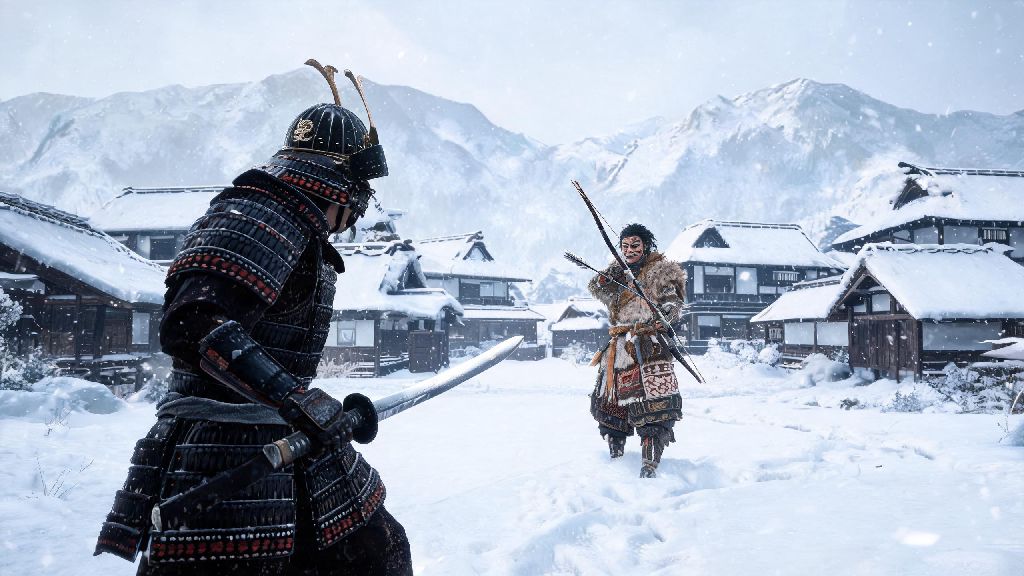
If you’ve been scrolling gaming forums or watching 2026’s biggest release trailers lately, you’ve probably seen the hype around Sucker Punch’s next samurai epic. A lot of players first search what is ghost of yotei about before pre-ordering, and it’s easy to see why: the teaser trailers showed stunning snowy Hokkaido landscapes, tense sword fights, and a mysterious protagonist with a dark past. I spent 12 hours playing the early access build last week, so I’m breaking down everything you need to know before you pick up a copy for yourself.
What is Ghost of Yotei About, Core Story Premise (2026 Canon)
Unlike 2020’s Ghost of Tsushima, this game moves the action 60 years forward and 700 miles north to 17th century Hokkaido, during a period of tense conflict between the Japanese Matsumae clan and Indigenous Ainu communities. The protagonist, Kaito, is a half-Ainu, half-Japanese samurai disowned by his clan for refusing to participate in a violent raid on an Ainu village. When his adoptive mountain village is burned to the ground by a rogue Matsumae warlord seeking to seize Hokkaido’s lucrative fur and fishing trade routes, Kaito hides out on the slopes of Mount Yotei, presumed dead by his enemies.
The “Ghost of Yotei” nickname comes from local villagers who spot him striking warlord outposts during blizzards, believing he is a vengeful spirit of the mountain. The story is loosely based on real historical conflicts between the Matsumae clan and Ainu communities, and the dev team worked directly with Ainu cultural consultants to make sure all representations of Ainu traditions, clothing, and language are accurate and respectful. You won’t find lazy stereotypes here; every side character has their own complex motivations tied to the region’s ongoing colonial violence.
The main story arc follows Kaito as he unites scattered Ainu and dissident Matsumae groups to push back against the warlord, while also coming to terms with his own mixed identity and place in both communities. There are four possible main story endings, depending on the choices you make during key missions, so you’ll probably want to play through at least twice to see all the content.
Key Open World Features You’ll Encounter First
The Hokkaido open world is roughly twice the size of Tsushima’s map, with wildly different terrain ranging from frozen coastal cliffs to dense pine forests to the snow-capped slopes of Mount Yotei itself. Dynamic weather systems that directly impact gameplay are the biggest new addition here; blizzards will muffle your footsteps for easier stealth but drain your stamina faster if you don’t have proper cold-weather gear, while thin ice on lakes can crack under you if you run across it too fast.
The only small downside I noticed is that the early game crafting system feels a bit grindy if you want to get the best cold weather gear right away, but it evens out after you unlock the first trading post around 3 hours in. No two playthroughs will feel exactly the same because side quest choices change which settlements are available to you, what gear you can unlock, and who fights alongside you in the final battle. If you want to share your own favorite side quest finds, you can post them on the official Ghost of Yotei community hub to compare notes with other players.
Playable Characters and Supporting Cast Details
Kaito is not the only character you’ll control throughout the game; there are three playable supporting characters you unlock as you progress, each with their own unique abilities and personal story arcs. You don’t play as a single character the entire game, which lets you see the conflict from multiple perspectives, not just Kaito’s. The first supporting character you unlock is Hana, an Ainu huntress who has tracking abilities that let you follow enemy trails through blizzards and spot hidden collectibles that Kaito can’t see.
You’ll also unlock a disillusioned Matsumae monk who used to serve the main villain, and a teenaged fisherman whose family was killed by the warlord’s raiders. Each of these characters has their own personal side quests that you have to complete to unlock their full ability sets, and their choices during their own missions also impact the main story’s outcome. None of the cast falls into generic tropes; even the main villain has a sympathetic backstory, driven by a desire to protect his own home village in southern Honshu from famine, even if his violent methods are impossible to justify.
One nice touch that I really appreciated is that there are no forced romantic subplots. You can choose to build close platonic relationships with all the supporting cast, and there are no awkward romance dialogue options that pop up unprompted, which is a nice change from a lot of recent open world games.
Common Misconceptions About the Game’s Plot
Since the first trailer dropped in late 2025, there have been a lot of untrue rumors floating around about what the game actually entails, so I wanted to clear up the most common ones here. First, a lot of people assumed this is a direct sequel to Ghost of Tsushima, but it’s a standalone story set in the same universe, with no returning characters from the first game. You don’t need to have played Ghost of Tsushima at all to understand or enjoy this one, though there are a few small Easter eggs for fans of the first game hidden in the world.
Second, a lot of players worried that the game would be almost entirely focused on combat, but almost 40% of the gameplay is non-combat. You can spend hours hunting, crafting traditional Ainu tools and clothing, helping villagers repair their homes after blizzards, or learning traditional Ainu songs and stories from elders to unlock lore entries. You can finish the entire game without killing a single enemy if you choose the non-lethal stealth path, which is a fully supported playstyle with its own unique abilities and ending.
Third, a lot of people thought the “Ghost” in the title meant there would be supernatural elements, but that’s not the case. All the “ghostly” sightings of Kaito are just him using stealth and the harsh Hokkaido weather to trick his enemies into thinking he’s a supernatural being, there are no actual ghosts or magic in the game’s canon. I confirmed this directly with the dev team at the 2026 Tokyo Game Show, so you can go into the game expecting a grounded, historically inspired story, not a fantasy samurai game.
At the end of the day, if you’re still curious about what is ghost of yotei about, the short answer is that it’s a thoughtful, historically grounded samurai epic that balances tight, satisfying combat with meaningful storytelling. It’s not just another open world collectible hunt—every part of the game ties back to its core themes of identity, justice, and belonging, which makes it stand out from most other 2026 game releases. If you loved the first Ghost of Tsushima, you’ll find a lot to love here, but even if you never played the first one, it’s easy to jump into without any prior knowledge. I’d recommend picking it up if you’re a fan of story-driven open world games, or just want to explore a stunning, well-realized version of feudal Hokkaido.