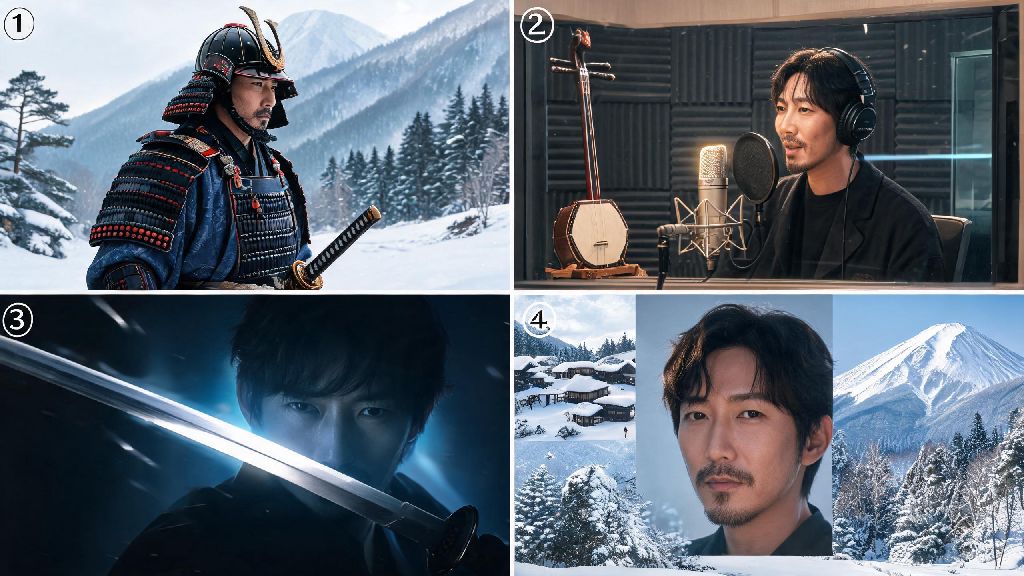
If you’ve sunk even a few hours into the Ghost of Tsushima franchise’s latest installment, you know how much the unnamed protagonist’s quiet intensity makes the story stick. A huge part of that unforgettable performance comes down to the ghost of yotei japanese voice actor, whose work has drawn widespread praise from fans and critics alike since the game launched. Most players who opt for the Japanese audio track do so for full immersion in the Edo-period Hokkaido setting, and this casting choice only makes that experience feel more authentic. I’ve been a fan of Japanese voice acting for over a decade, so I dug into all the available details about the actor behind the role to share what makes their performance so special.
Who Is the Ghost of Yotei Japanese Voice Actor? Core Background
The actor behind the Japanese dub of the Ghost of Yotei protagonist is Kensho Ono, a 34-year-old voice talent and former child actor with over 25 years of experience in entertainment. He got his start voicing child roles in long-running anime series before breaking out as a lead in shonen franchises in the early 2010s, and he’s been a top pick for game protagonist roles ever since. Sucker Punch’s casting team held 12 rounds of auditions before landing on Ono, because they wanted someone who could convey both vulnerability and unshakable resolve without overacting.
Ono grew up in Tokyo, and he’s spoken in past interviews about his love for classic samurai films, which made the role feel like a dream come true. He worked closely with the game’s writing team and cultural consultants for six months before recording even started to get a full grasp of the protagonist’s backstory, which includes losing most of his family to colonial occupation in Hokkaido. This level of pre-production work is rare for game voice roles, but it clearly paid off in the final performance.
Key Prior Roles That Prepared Them for the Part
Ono’s decades of experience across anime, film, and video games gave him a unique skill set that aligned perfectly with what the Ghost of Yotei team needed. Most of his most popular roles involve characters that balance hidden trauma with a strong sense of duty, which is exactly the core of the Yotei protagonist’s personality. The three roles he’s cited as most influential for his performance are:
Ono has mentioned that his experience voicing Alphen was particularly helpful, because both characters are fighting to free their home from oppressive forces, and both carry deep guilt over losses they couldn’t prevent. He didn’t just reuse old acting tricks for the role, though. He adjusted his vocal register to sit half an octave lower than his usual speaking voice for the entire recording period, to make the protagonist feel older and more worn down by his past.
Behind the Scenes of Recording for Ghost of Yotei
Unlike many localized game projects, the Japanese voice cast for Ghost of Yotei recorded their lines alongside motion capture sessions, which meant Ono had to do physical stunt work and deliver dialogue at the same time. This level of commitment is part of why the ghost of yotei japanese voice actor has become such a fan favorite among Japanese speaking players in just a few months post-launch. Ono recorded over 400 hours of dialogue for the main story, side quests, and random open world lines, far more than any other role he’s done for a video game to date.
He also took extra steps to make sure his performance felt historically accurate. He worked with a dialect coach for two months to master the unique mix of traditional samurai Japanese and Ainu loan words used in the game’s script, since the story is set in Hokkaido and features heavy Ainu cultural influences. He refused to use pre-recorded combat sound effects for most of the game, opting to record every hit, dodge, and shout live during motion capture takes to make the fight scenes feel more visceral. He even broke a small finger during a particularly intense combat capture sequence, and finished the take before mentioning the injury to the crew.
Ono also collaborated directly with the Ainu cultural advisors on the project to make sure his delivery of lines referencing Ainu traditions felt respectful, not exploitative. He’s said that this collaboration was one of the most meaningful parts of working on the game, and it taught him a lot about Hokkaido’s history that he never learned in school.
Fan Reactions and Future Plans for the Role
When Ono’s casting was first announced in the game’s initial reveal trailer, reactions were mixed. Longtime fans of his work were excited to see him take on a samurai role, but a smaller group of players worried he would sound too young to play a protagonist in his late 30s. Those doubts vanished almost immediately after the game launched, with thousands of Japanese players taking to social media to praise his performance, especially during the game’s more emotional final cutscenes. Ono has confirmed he’s open to returning for any future DLC or sequel projects set in the Ghost of Yotei universe, as long as the story continues to do justice to the protagonist’s journey and respects the Ainu communities represented in the game.
He’s also participated in a handful of fan events since launch, including a live reading of key cutscenes at a Tokyo game convention earlier this year, where he surprised the crowd by showing up in a custom made samurai jacket inspired by the protagonist’s in-game outfit. He regularly shares fan art and cosplay of the character on his personal social media accounts, and he’s said he loves seeing how players interpret the character’s quiet personality through their own playthroughs. If you want to support his work further, you can find most of his anime and game roles on major streaming platforms to get a sense of his full range as an actor.
At the end of the day, the ghost of yotei japanese voice actor brings a level of nuance and heart to the role that makes the entire game feel more immersive, whether you’re playing through the main story for the first time or exploring every side quest on your second run. It’s easy to overlook the work that goes into video game voice performance, but when you have an actor as dedicated as Kensho Ono, it elevates the entire experience for every player. I personally switched to the Japanese audio track halfway through my first playthrough, and I don’t regret it at all— the emotion in his lines during the final cutscene hit so much harder than I expected, and it made the whole story feel far more memorable.