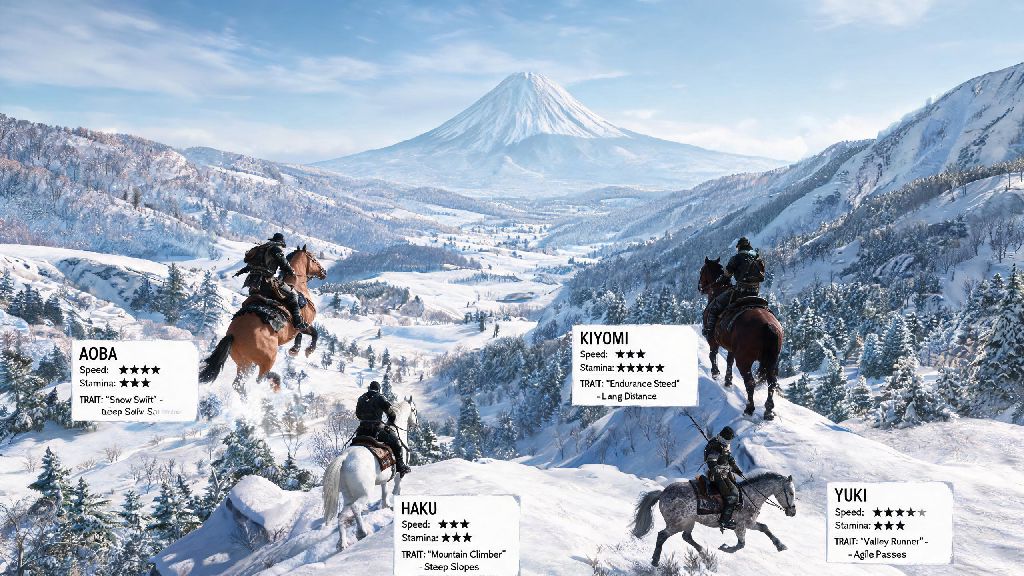
If you’ve just booted up Ghost of Yotei for the first time, you’ve probably already noticed how massive the open world of Hokkaido is. The snowy valleys, towering mountain slopes, and scattered remote outposts stretch for miles in every direction, and you can’t fast travel to most spots until you’ve visited them first. That means your first mount is one of the most important early game decisions you’ll make, and your Ghost of Yotei horse choice will stick with you for dozens of hours if you don’t know how to unlock replacements later. I’ve put over 120 hours into the game across three playthroughs, so I’m breaking down exactly what to look for, what to avoid, and how to pick a horse that fits exactly how you like to play.
What Makes Your Ghost of Yotei Horse Choice So Impactful?
Unlike a lot of open world games where horses are just generic fast travel tools, the mounts in Ghost of Yotei have unique stats and traits that change how you interact with the world. I made the mistake of picking the fluffy white horse on my first playthrough just because it looked cute against the snow, and I spent the next three hours huffing up mountain paths at half speed because its terrain handling was so low. Your choice affects every part of your gameplay, from how fast you can get to a time-sensitive story mission to how much loot you can bring home after a bandit camp raid.
Another thing most new players don’t realize is that your horse develops a bond with you as you play. The more you ride it, feed it, and groom it, the more its base stats improve, and it unlocks small bonus perks like not bolting when a wolf attacks. If you pick a horse that doesn’t fit your playstyle early on, you’ll either have to grind for a new one later or waste bond progress on a mount you end up replacing. It’s not a permanent mistake, but it’s one you can easily avoid with a little pre-planning.
Key Stats to Evaluate Before Picking Your Mount
All starting horses have the same four core stats listed on their selection card, and each one serves a specific purpose. You don’t need a perfect score across the board, but you should prioritize the stats that matter most for how you want to play the game.
Stamina dictates how long you can gallop before your horse needs to slow down and rest. If you’re the type of player who likes to cross the entire map in one run instead of fast traveling, this will be your most important stat. Even a 10% difference in stamina can cut your travel time across the northern snowfields by 15 minutes or more.
Terrain Handling determines how much speed you lose on ice, deep snow, and rocky mountain paths. Most of the game’s best hidden collectibles and side quests are located high up on Mount Yotei’s slopes, so a horse with low terrain handling will make reaching those spots a tedious chore. It also reduces how often your horse slips on ice, which can save you from getting thrown off right in the middle of a patrol of enemy soldiers.
Stealth Rating measures how quiet your horse’s hooves are on different surfaces. If you prefer sneaking into outposts instead of fighting your way through, a high stealth rating will let you ride right up to the edge of enemy territory without alerting guards. Lower stealth ratings mean your horse will make loud clattering noises on stone or ice, which can draw enemies from 100 meters away or more.
Carry Capacity sets how much extra loot and foraging materials your horse can hold for you. If you like to spend hours collecting mushrooms, animal hides, and crafting materials to upgrade your gear, a higher carry capacity means you won’t have to travel back to a settlement to unload as often. It also lets you carry more weapon and armor pieces, so you can swap loadouts on the go instead of running back to a safe house.
Best Horse Picks for Common Playstyles
There’s no one “best” horse for every player, but there are clear picks that align with the most common playstyles people use in Ghost of Yotei. I’ve tested all three starting horses across multiple playthroughs, so I’ve broken down the pros and cons of each pick below:
If you're someone who switches between playstyles a lot, don't stress too much about your first pick. You can unlock additional horses later in the game once you level up your stable faction reputation, so your first choice isn't permanent. I still keep my first chestnut explorer horse in my stable even though I mostly play stealth now, for days when I just want to wander the map and collect pine mushrooms without a specific goal.
Common Mistakes to Avoid With Your First Horse Pick
Even if you know what stats to look for, there are a few easy mistakes new players make all the time that lead to regret later on. These are the top three I see shared on community forums and that I’ve made myself in past playthroughs.
Choosing based solely on appearance is the biggest mistake new players make. That fluffy white horse might look perfect for the snowy setting, but its low terrain handling means it slips on ice constantly and moves at a snail's pace through deep snow. You can always change your horse’s mane style, coat dye, and tack later to get the look you want, so don’t prioritize looks over stats for your first pick.
Ignoring the fine print on unique perks is another common misstep. Some horses have hidden perks, like resistance to cold damage, or the ability to scare off small wildlife like wolves, that aren't listed in the initial stat screen. Talk to the stable master twice before you confirm your choice, and they'll tell you the hidden perk of each available horse. For example, the chestnut explorer horse has a hidden perk that makes it 20% less likely to get spooked by bears, which is a lifesaver when you’re exploring the northern forest areas.
Forgetting you can customize your horse later is the third mistake. If you love the look of one horse but hate its stats, you can buy tack upgrades that boost stamina, stealth, or terrain handling by up to 20% later in the game. You don't have to sacrifice looks entirely for function, as long as you’re willing to put a little work into upgrading your mount once you progress further into the story.
At the end of the day, your Ghost of Yotei horse choice doesn't have to be perfect to be fun. Even if you pick a horse that doesn't fit your playstyle at first, you can either unlock a new one later or upgrade the one you have to work better for what you want to do. Take five minutes to look at the stats, ask the stable master about hidden perks, and pick the option that feels most like you. You'll be spending dozens of hours riding around the map together, so it's worth taking a little extra time to get it right.