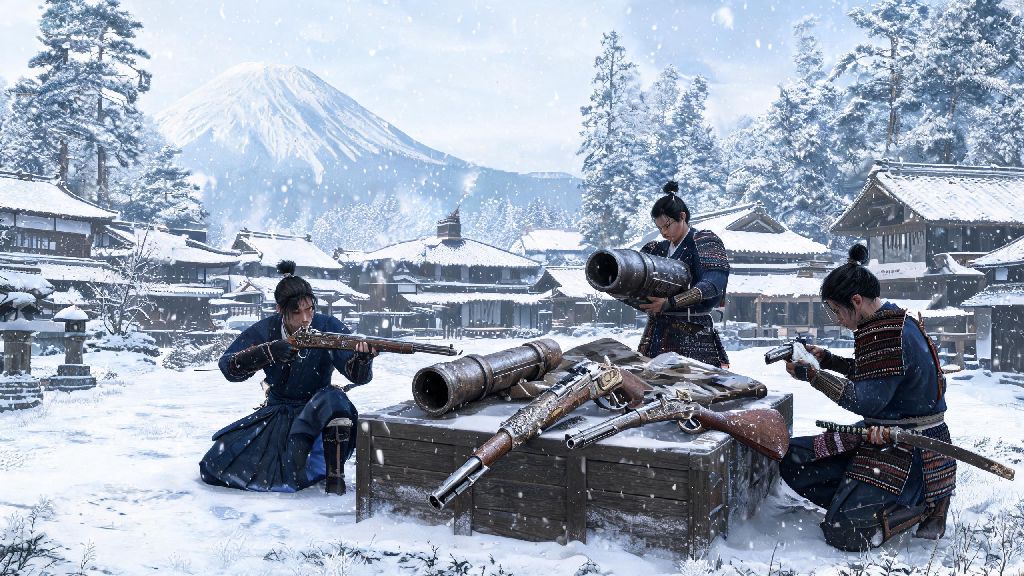
Ghost of Yotei’s alternate feudal Hokkaido setting blends traditional samurai combat with experimental 19th-century technology, and no feature embodies that fusion better than its weapon roster. The ghost of yotei gun lineup is far more varied than most new players expect, ranging from clunky early hand cannons to sleek, rare revolving rifles that feel almost out of place in the game’s snowy, rural setting. After 40+ hours of playthroughs across both stealth and aggressive playstyles, I’ve put together this guide to help you cut through the confusion, pick the right weapons for your run, and avoid the common mistakes that make combat feel frustrating. You don’t have to grind for every single firearm to have a good time, but knowing which ones are worth your time will make every mission feel far more rewarding.
Every Ghost of Yotei Gun Type and Their Best Use Cases
All guns in the game fall into one of four core categories, each with distinct strengths, weaknesses, and ideal use scenarios. You’ll unlock the first two categories within the first three hours of gameplay, while the latter two are reserved for mid and late-game progression. Hand cannons are your default sidearm, lightweight, easy to carry, and powerful enough to take down basic bandits in two shots at close range. They have brutal recoil and extremely slow reload speeds, though, so they’re best used as a backup when you’re out of sword stamina or caught off guard by a single enemy. Matchlock rifles are the mid-range workhorse of the roster, with far better range and accuracy than hand cannons, and a faster reload speed once you unlock basic upgrades. They’re perfect for picking off enemies from behind cover before you enter a camp, or for taking down distant wildlife for crafting materials. Revolving rifles are the rare late-game DPS option, with a six-round magazine and fast fire rate that makes them ideal for aggressive, run-and-gun playstyles. They’re extremely loud, though, so they’ll alert every enemy in the area as soon as you fire your first shot. Experimental shotguns are the least common type, with a wide spread that makes them devastating in tight, enclosed spaces like castle corridors or cave systems. They’re almost useless at ranges over 10 meters, so they’re only worth carrying if you know you’re heading into a close-quarters mission. If you’re not sure which guns to prioritize for your first playthrough, stick to these three versatile options that work for almost every encounter:
You don't need to hoard upgrade materials for late-game weapons, either. Upgrading the mid-game Bamboo Barrel Matchlock to max level will get you through 90% of the game’s content, and you won’t find a better all-around option until you’re almost done with the main story. I wasted 10 hours grinding for rare upgrade materials early on because I thought I’d need them for a better gun later, and I regretted it as soon as I realized how much easier upgrading my base matchlock would have made the early boss fights.
How to Unlock Rare and Hidden Gun Variants
Most of the basic guns in the game unlock automatically as you progress through the main story, but the best, most versatile variants are hidden behind side content, not main quest beats. Most hidden gun variants are tied to unmarked side content, not main story progression, so you’ll have to explore off the main path if you want to get your hands on them. The easiest way to find rare guns is to check village notice boards for bounty quests. Many high-level bounties offer unique gun variants as a reward if you take the target alive, instead of killing them on sight. You don’t get any extra reward for killing a bounty target, so it’s always worth taking the extra time to stun them and turn them in for the weapon prize. Hidden chests in abandoned castles and mountain shrines also hold rare gun variants, but most of them are locked behind simple puzzles. For example, the fan-favorite Fire Breath Shotgun is hidden in a chest behind the eastern forest waterfall, and you have to light three nearby shrine torches in the correct order to open the door to the cave. You can’t buy rare guns from regular merchants, either. The only merchant that sells unique gun variants is the wandering blacksmith who spawns randomly in small villages across the map, and he only sells one rare weapon per playthrough, so make sure you have enough gold saved up if you run into him. I ran into him during my first playthrough when I only had 200 gold on me, and I missed out on a rare silenced matchlock that would have made my stealth runs way easier.
Best Attachments and Upgrade Paths for Every Gun Type
Each ghost of yotei gun has a unique upgrade tree that can’t be reset, so you want to make sure you pick upgrades that fit how you plan to use the weapon. Prioritize utility upgrades over raw damage for most gun types, because raw damage boosts are barely noticeable for most weapons, while utility upgrades fix the core flaws of each gun type. For hand cannons, always invest in reload speed upgrades first. The biggest downside of hand cannons is the 3-second reload time that leaves you completely exposed, and maxing out reload speed cuts that time in half, making them a far more reliable backup option. For matchlock rifles, prioritize range and accuracy upgrades first, then reload speed. A max-range matchlock can take down enemies from 200 meters away, which is perfect for stealth runs where you don’t want to get close to enemy camps. For revolving rifles, prioritize recoil reduction first. The high fire rate of revolving rifles makes them almost impossible to control if you don’t upgrade recoil, and maxing out recoil reduction lets you land all six shots on a single target even at mid range. For shotguns, prioritize spread reduction first, which makes the shot cluster tighter and extends their effective range by almost 5 meters. When it comes to attachments, the silencer for matchlocks is the most useful attachment in the game for stealth players. It reduces damage by 10% but makes your shots almost completely silent, so you can take out entire camps without alerting a single enemy. For aggressive players, the extended magazine attachment for revolving rifles adds two extra rounds per magazine, which is enough to take down an entire squad of four enemies without reloading. You can swap attachments for free at any campfire, so don’t feel like you have to stick to one build for all situations. If you’re heading into a castle raid, swap your silencer for a damage boost attachment, and swap it back when you’re done with the mission.
Common Gun Play Mistakes to Avoid in Ghost of Yotei
Even if you have the best guns in the game unlocked and fully upgraded, you’ll still struggle with combat if you’re making these common mistakes that most new players run into. First, don’t use guns without a silencer during stealth runs. Even the quietest hand cannon will alert every enemy within 100 meters when you fire it, and you’ll end up swarmed by enemies before you can take down your first target. Use your bow for stealth kills unless you have a silenced matchlock equipped. Second, don’t waste rare ammo on basic enemies. The ghost of yotei gun ammo economy is pretty tight, and you can only buy rare ammo types from the wandering blacksmith. Save your revolving rifle and shotgun ammo for elite samurai and boss fights, and use your sword or bow for basic bandits that you can take down with one or two hits. Third, don’t forget to swap your loadout before starting a main story mission. Always check your loadout before starting a main story mission, because you can’t swap weapons or attachments mid-mission. If you show up to a castle raid with a long-range matchlock equipped, you’ll be stuck struggling in tight corridors with a gun that’s almost useless at close range. Fourth, don’t use guns when you’re hunting for crafting materials. Gunshots are extremely loud, and they’ll scare off all wildlife within 200 meters, so you’ll never be able to get close enough to deer or boar to harvest their materials. Use your bow for hunting, it’s silent and just as effective as a gun for taking down wildlife. I made this mistake all the time during my first playthrough, and I spent hours wandering around the map looking for animals that had already run away because I’d fired a gun a few minutes earlier.
At the end of the day, the ghost of yotei gun system is designed to fit every playstyle, so you don’t have to force yourself to use a gun that doesn’t feel fun for you. If you prefer stealth play, invest in silenced matchlocks and ignore the loud revolving rifles entirely. If you prefer aggressive, up-close combat, stick to shotguns and hand cannons and skip the long-range upgrades entirely. Don’t get caught up in grinding for every single gun variant, either. Even the base guns you unlock early in the game are more than enough to beat the main story if you upgrade them properly. The best part of the game’s weapon system is how flexible it is, so experiment with different loadouts and upgrades until you find something that feels right for your playthrough.